Juniper with Megaport Virtual Edge
Juniper’s network solutions deliver advanced routing, security, and SD-WAN capabilities for modern enterprise connectivity. By integrating Juniper products with Megaport’s MVE, enterprises gain access to powerful networking capabilities on Megaport’s global private SDN.
Megaport provides the network underlay, while Juniper manages routing policies and secure communications across clouds, external networks, and data centers. You use the Megaport Portal to create and order MVE instances and establish Virtual Cross Connects (VXCs) to cloud on-ramps and other services, with Juniper delivering sophisticated overlay networking capabilities for resilient and secure connectivity.
Juniper Session Smart Router (SSR)
Juniper SSR on MVE redefines SD-WAN deployment by removing the complexity of traditional tunnel-based overlays. It reduces operational burden while providing enhanced security and application performance across Megaport’s global private network.
Using Secure Vector Routing (SVR), Juniper SSR creates dynamic, session-aware connections with built-in security that simplify network management and optimize application performance across distributed sites and multicloud environments.
When you create a Juniper SSR MVE in the Megaport Portal, the instance is deployed and managed through the Juniper Mist platform.
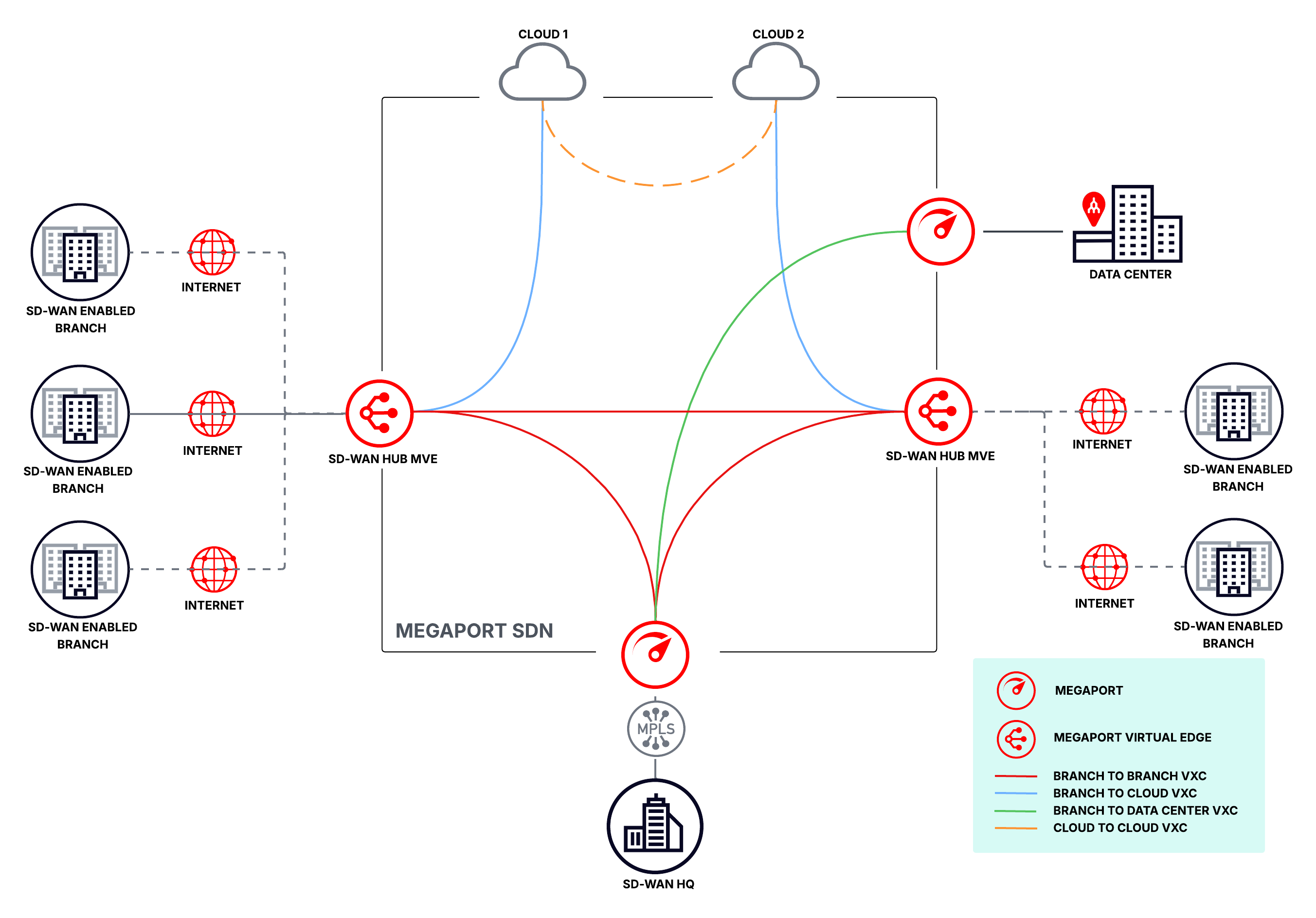
The following diagram shows an example network implementation of Juniper SSR features over the Megaport network.
Juniper vSRX
Juniper vSRX on MVE lets you deploy Juniper’s Next Generation Firewall (NGFW)Next Generation Firewall (NGFW) is a third-generation integrated network security platform that combines a traditional firewall with additional advanced filtering functions. Unlike older firewalls that only look at port and protocol (Layer 4), NGFW inspects the actual data within the traffic (Layer 7) to identify and block sophisticated modern threats.
directly on the Megaport network. This removes the need for physical hardware, shipping delays, and data center rack space.
By enforcing security policies at the network edge, the vSRX inspects and processes traffic closer to its source. This reduces latency and avoids the need to route traffic through a centralized security hub before reaching its destination.